Tables
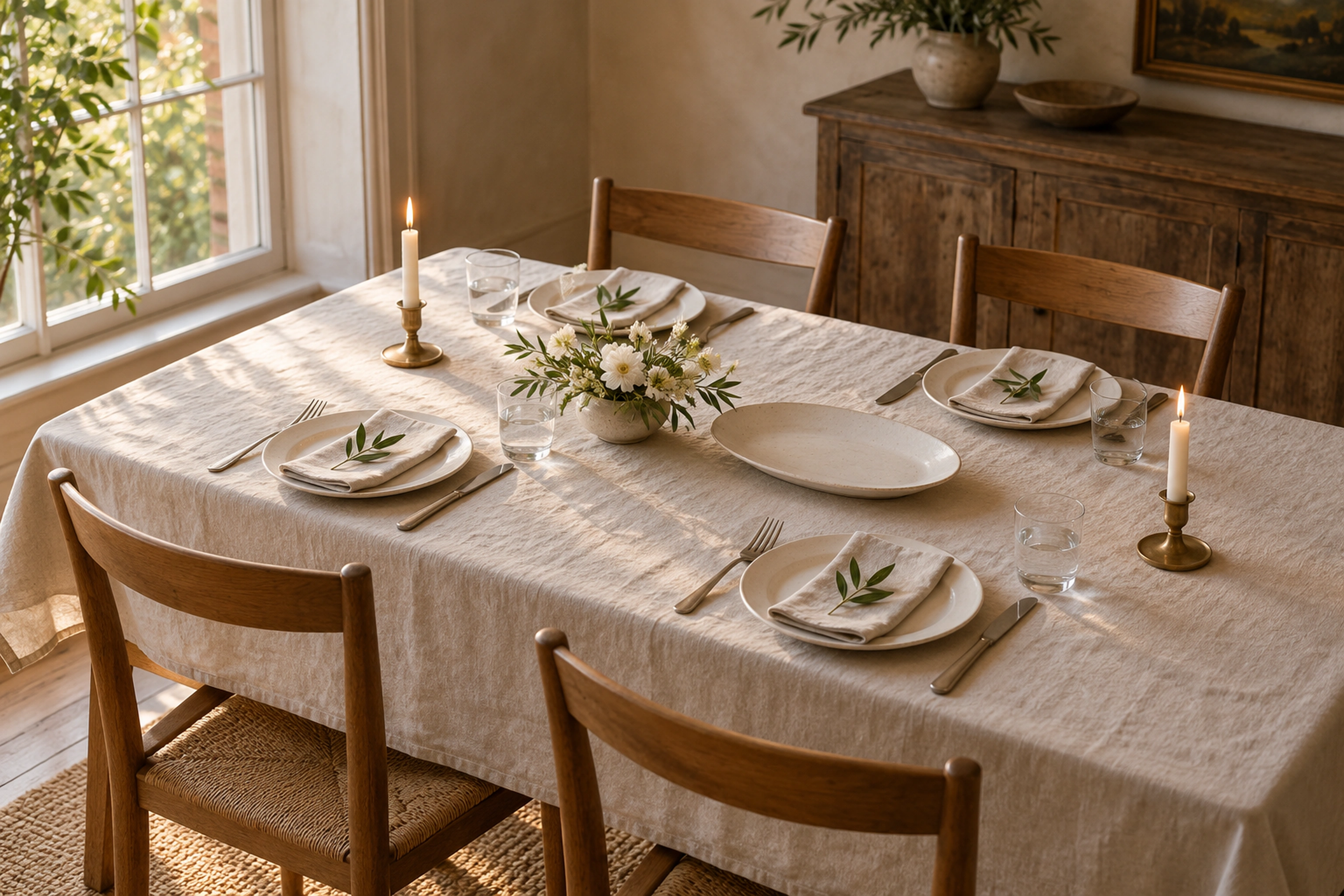
Small Dinner Party Table Setting for Four
A calm, candlelit table with soft linen, olive branches, and warm brass. Every piece is simple to find and easy to reuse.

Tables · Wedding Table Settings & Centerpieces
Choose a centerpiece that leaves room for the meal and lets guests see each other. Start with one low arrangement on a round table or repeat smaller pieces along a rectangular table. Check stability and venue rules before adding anything tall or any real flame.
Favorites are saved on this browser. Sign in to keep them across devices.
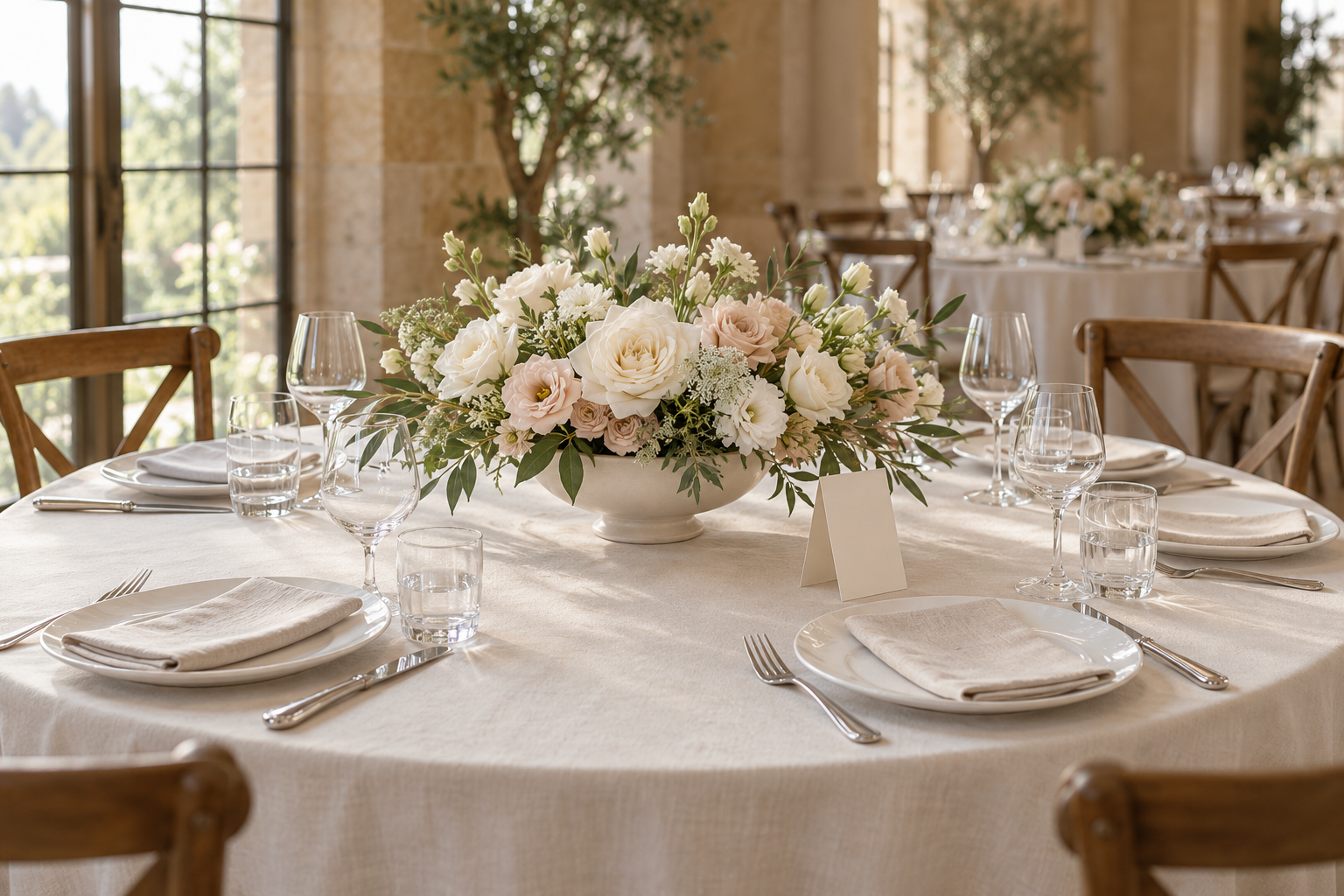
The best wedding table centerpiece ideas bring the room together while leaving guests comfortable enough to enjoy dinner. Start with the table dimensions, meal service and overall wedding palette, then choose a design that fits those conditions. A centerpiece should give the table a focal point without taking space needed for glassware, bread, shared dishes or table numbers.
Before ordering flowers or hiring vessels, assemble one complete sample table using the actual linens, plates and glasses where possible. Photograph it from the entrance and check it from a seated guest’s position. This reveals problems that a close-up inspiration image can hide, including blocked views, oversized vessels and too little space for service.
A single low arrangement is one of the most adaptable simple wedding table centerpiece ideas. Choose a stable bowl, compote or other watertight vessel with a footprint that suits the table. Build a defined shape with a few focal flowers, smaller supporting blooms and restrained foliage rather than packing in stems until the arrangement becomes a solid mound.
Check the finished height from seated positions on opposite sides of the table. Flowers should not force guests to lean around the arrangement to talk. Keep trailing foliage away from place settings, water contained inside the vessel and any floral mechanics concealed.
For an elegant palette, repeat one or two flower colours already used elsewhere in the wedding. Red roses and white carnations are one possible combination, but ask the floral supplier about availability, substitutions and how the chosen stems will hold in the reception conditions. Judge the complete arrangement rather than choosing flowers solely from an isolated photograph.
A lantern with a compatible flameless light provides a clear focal point without requiring a floral arrangement. Choose a finish that relates to the room and tableware, such as muted brass, black metal or painted wood. Check the lantern’s full height, including its handle, because a low light inside a tall frame can still obstruct conversation.
Test the light in conditions similar to the reception. A gentle glow that looks attractive in a dark room may barely register during daylight, while a bright, cool light can feel out of place beside warm venue lighting. Check batteries, switches and access before setup, and assign someone to turn the lights on before guests enter.
An enclosed real candle is not automatically allowed. Confirm the venue’s requirements and follow the candle and holder manufacturers’ instructions. If permission or clearances are uncertain, choose flameless lighting rather than adding an unresolved issue to the setup plan.
Repeated pieces can create rhythm along a rectangular table without relying on one large arrangement. As a starting example, use three small vessels with a few short stems in each, then adjust their number and spacing to the measured table. Keep vessel shapes or flower colours consistent so the pieces read as one composition rather than unrelated decorations.
Leave deliberate gaps for water bottles, shared platters, table numbers and other service items. Place settings on both sides must still have comfortable room. A narrow table may need fewer pieces or a slimmer arrangement than a wide table, even when both seat the same number of guests.
For unique wedding table centerpiece ideas, personalise one element rather than adding more objects. A meaningful ceramic vessel, a restrained colour accent or flowers chosen for their connection to the couple can make the design distinctive. Keep the remaining details simple enough for that choice to stand out.
Wedding reception centerpiece ideas should be planned around how the meal will be served. Family-style dining needs space for shared dishes and for guests to pass them comfortably. Plated service still requires clear access for staff to place and remove dishes. Confirm those needs with the caterer before deciding how much of the table can be used for decoration.
Round tables often suit a central arrangement or compact grouping. Rectangular tables can support a repeated pattern, but decorations should follow the usable centre of the table rather than fill its entire length. Remember that runners, chargers, favours and extra glassware all contribute to visual and physical crowding.
Tall arrangements can work when the base is secure and the flowers sit above a genuinely clear conversation area. Check the view through the stems and stand as well as underneath the blooms. A narrow-looking pedestal in a photograph may have a broad base that competes with place settings. Have substantial or elevated designs assessed and installed by an appropriate supplier.
Elegant wedding table centerpiece ideas also consider scent, lighting and the room itself. Avoid strongly scented arrangements close to food, and check how flower colours and vessel finishes appear under the venue’s evening lighting. In a richly decorated room, a restrained centerpiece may provide balance; in a plain space, repeated colour or shape can help create cohesion.
When collecting wedding table centerpiece ideas on Pinterest, save examples for their shape, palette or materials rather than assuming the entire setup will work at your venue. Compare wedding table centerpiece ideas pictures and images with your actual table measurements. Styled photographs may omit water, wine glasses, bread plates and service items that will be present during dinner.
Keep a short design brief for the chosen look: vessel, approximate finished dimensions, flower palette or lighting choice, table-number position and approved substitutions. This gives the florist, stylist, caterer and setup team a shared reference and helps prevent last-minute changes that compromise the layout.
No. Two coordinated designs can add variety, particularly in a room with different table shapes. Repeat a clear connection such as vessel finish, flower palette or overall silhouette. Approve a sample of each version and make sure guests receive a similarly considered table, even when the arrangements differ.
No. Height should serve the room and guest experience. A low arrangement can feel just as polished while simplifying conversation, transport and setup. Choose tall designs only when their stability, sightlines and service footprint have been properly checked.
Yes. A restrained grouping of suitable lights or one well-chosen lantern can provide a complete flower-free centerpiece. Varying heights can add interest, but every item still needs a stable position and enough space around it. Real candles require venue permission and compliance with the relevant product instructions.
Start with the actual table dimensions and dining layout. A compact central arrangement often suits a round table, while repeated smaller pieces can follow the length of a rectangular table. Test both with the required place settings and serving items rather than selecting a design based only on table shape.
Focus on proportion, condition and consistency. A clean vessel, fresh-looking materials, concealed mechanics and a deliberate colour palette usually create a more polished impression than numerous inexpensive decorations. Repeat the design confidently and remove anything that looks accidental or interferes with dining.
Sometimes, but plan the transfer with the florist and venue. Confirm that the arrangements fit their reception positions, can be moved without damage and will arrive before guests need the space. Assign people, transport and access rather than assuming the move will happen during photographs or cocktails.
Share the venue, event date, table measurements, service style, budget and a small selection of reference images. Explain what you like about each image, such as the low shape or restrained palette. Ask for a design that fits those requirements, including proposed substitutions and a clear description of delivery, setup and collection.
Confirm table dimensions, room layout, dining/service needs and flame rules with the venue.
Choose one of the three example directions and list its components per table. Keep flowers and lighting compatible with the selected vessel.
Place one arrangement on a measured table with representative plates and glasses. Check it from seated positions and from the serving side.
Check each vessel is stable on the actual surface. Replace any piece that tips, rocks or needs improvised support.
Confirm transport and setup responsibilities. Repeat the approved arrangement and position a readable table number away from guest and serving space.
At final setup, check sightlines, access and stability again. Use flameless lighting unless real flames have been explicitly approved and safely arranged.
Tables
A calm, candlelit table with soft linen, olive branches, and warm brass. Every piece is simple to find and easy to reuse.
Food
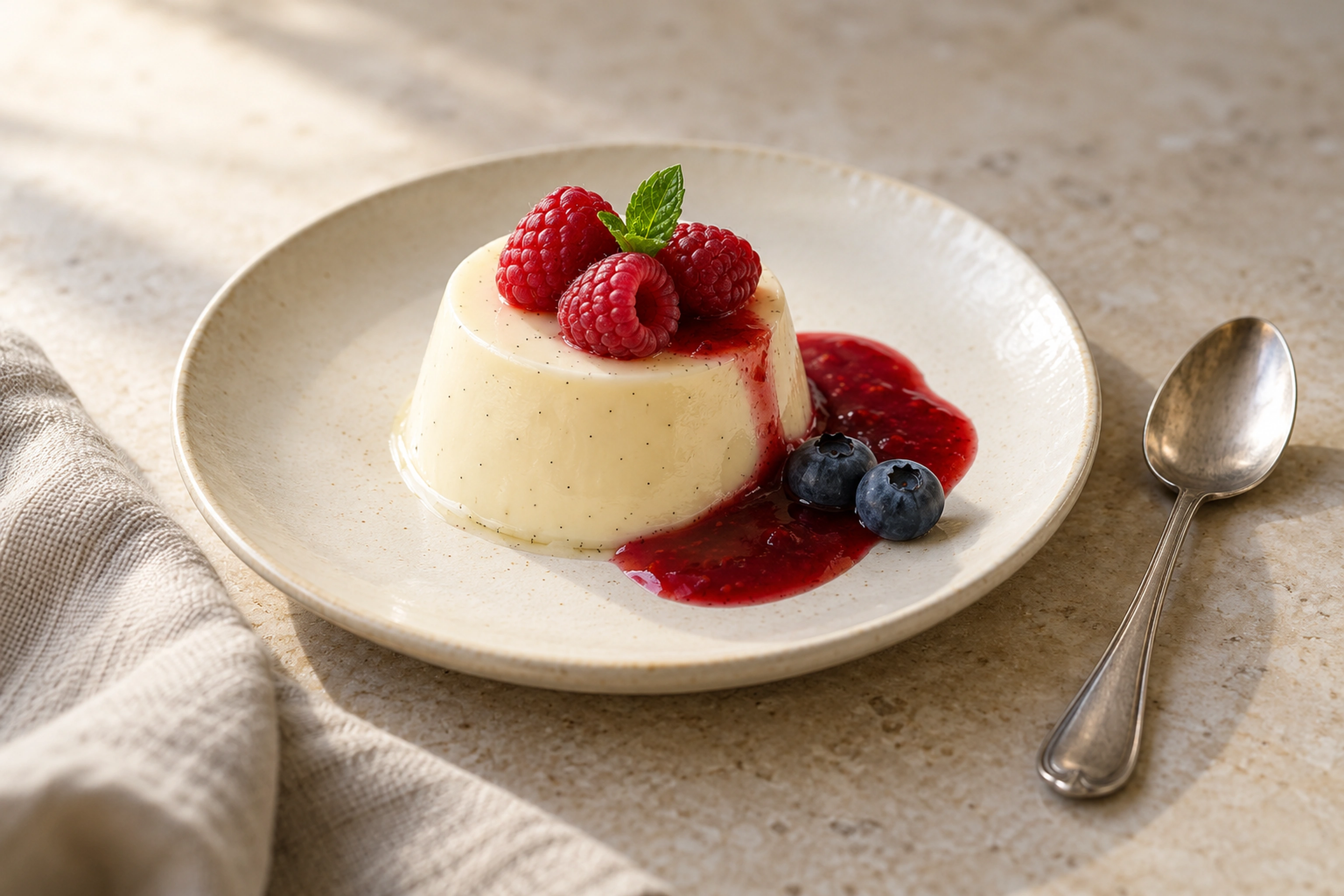
An individual vanilla panna cotta plating concept with berries, mint and red sauce.

Drinks
Recreate the strawberry and lemon garnish on an iced pink drink in a clear highball glass.