Drinks
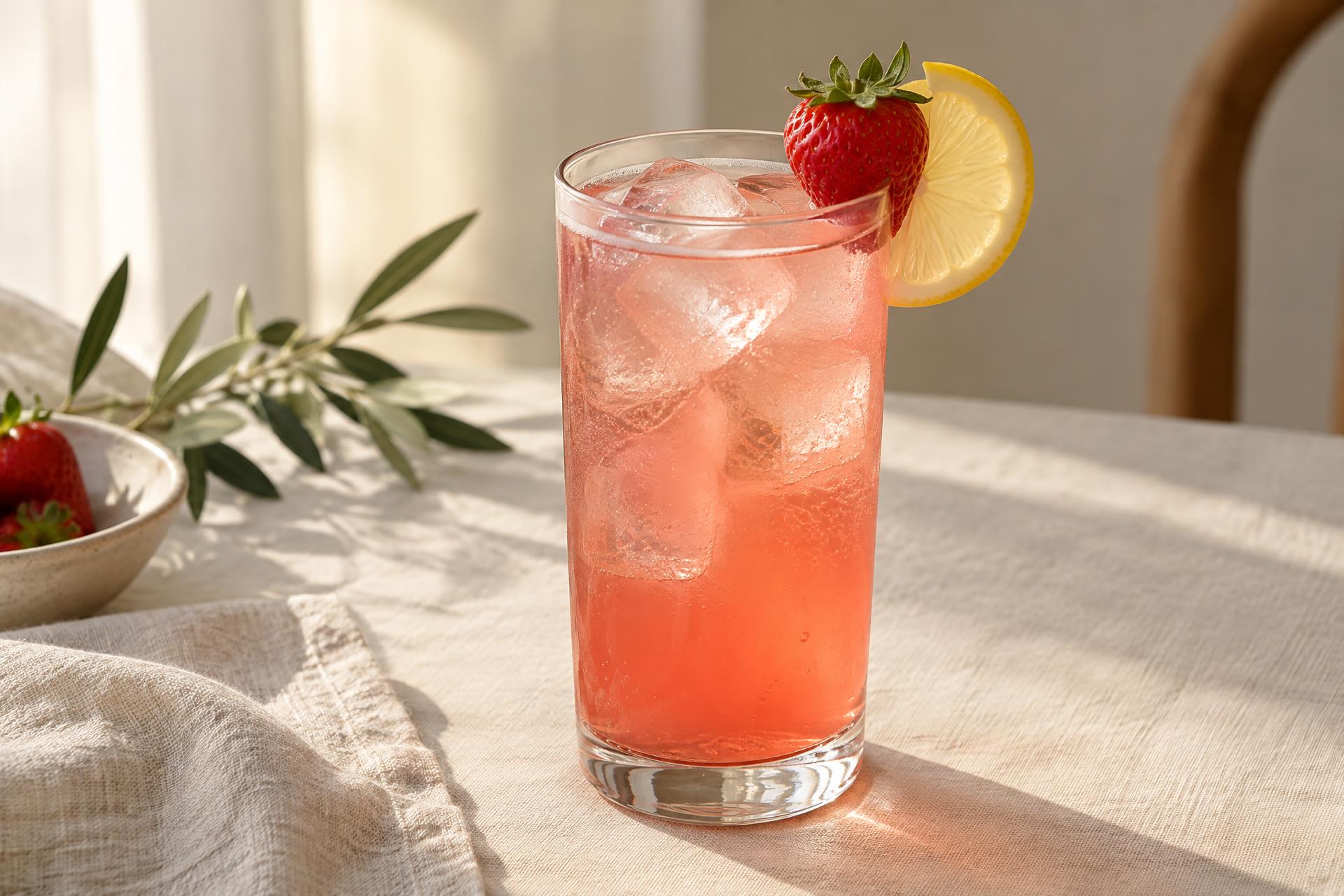
Strawberry-Citrus Mocktail Garnish
Recreate the strawberry and lemon garnish on an iced pink drink in a clear highball glass.

Drinks · Easy Cocktail & Mocktail Garnishes
Peel a strip from a washed lemon, trim excess pith on a board and gently shape it around a clean spoon handle. Express oils over a compatible drink if desired; a useful peel strip does not have to hold a tight curl.
Favorites are saved on this browser. Sign in to keep them across devices.
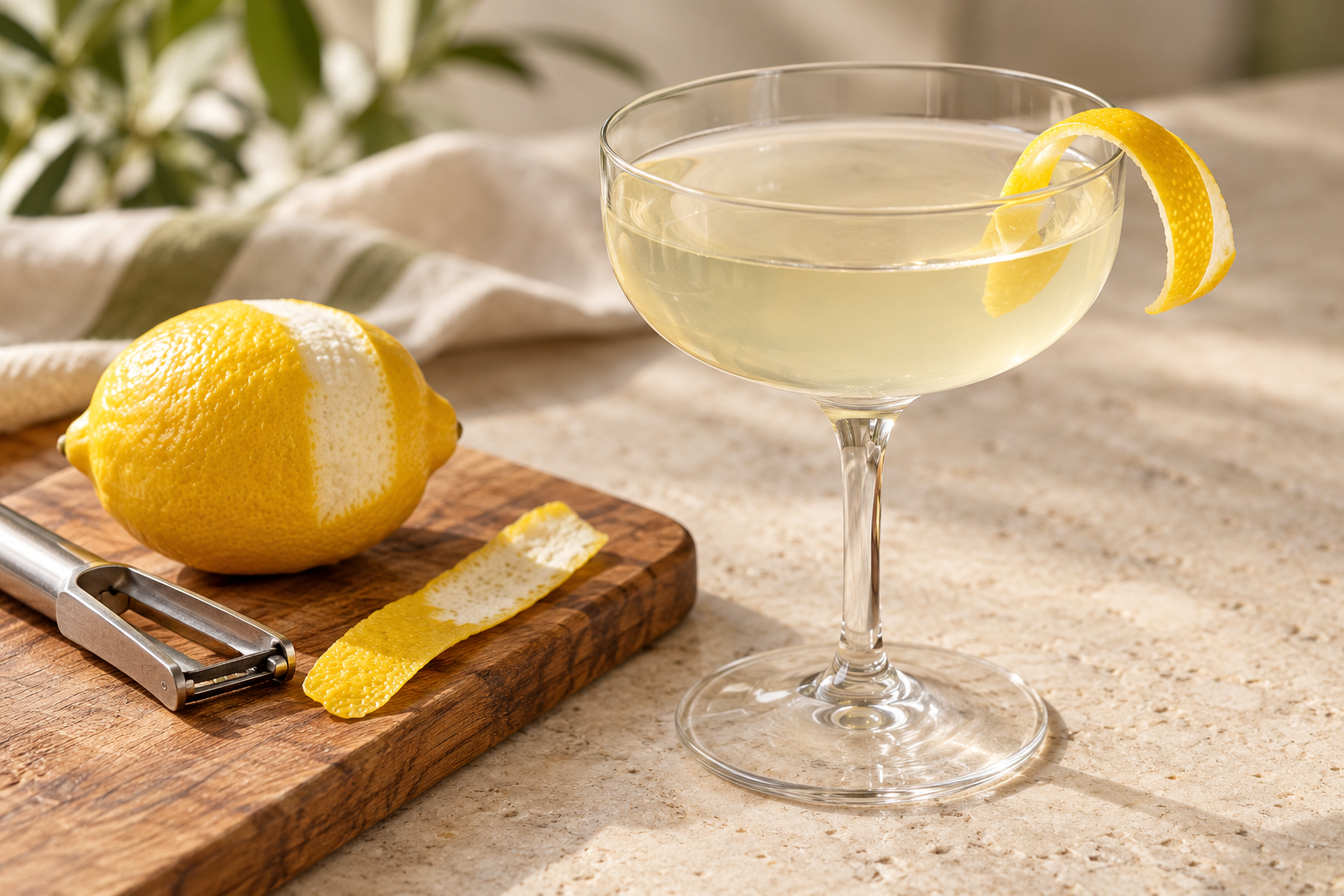
Learning how to make a lemon twist garnish starts with choosing its purpose: fresh citrus aroma, a decorative finish, or both. A broad strip of peel is easy to bend over a drink to release aromatic oils. A narrower strip creates a more delicate curl. For entertaining, choose a shape that is quick to repeat and stays securely in the glass; an elegant, relaxed curve is often more useful than a tightly wound spiral.
The yellow outer skin contains the fragrant oils. A little white pith provides structure, so there is no need to remove every trace. The aim is a flexible, intact strip rather than the thinnest possible shaving.
Choose a firm, fresh lemon with an evenly coloured skin and no mould, soft spots or shrivelling. Look for a broad, relatively smooth area that will give your peeler a continuous path. A lemon that feels hard and dry may produce brittle peel, while a very soft one can be difficult to control.
Wash your hands, rinse the lemon thoroughly under running water, rub its surface and dry it with a clean towel before cutting. Do not use soap, detergent or bleach on produce. Check any packaging instructions, particularly because the peel will touch the drink; washing does not guarantee removal of every surface treatment.
A sharp vegetable peeler is the simplest starting point for an easy lemon twist garnish. Work over a stable board, keep your supporting fingers outside the blade’s path, and remove a short strip from a broad section of the lemon. For a first attempt, aim for roughly 5–7 cm long and 1–1.5 cm wide. These are useful starting dimensions, not a requirement: the right size depends on the lemon and the glass.
If using a paring knife, secure the lemon on the board and make shallow, controlled cuts away from your fingers. Do not try to carve one long spiral around a lemon held in mid-air. A short, tidy strip is easier to prepare consistently for several guests and wastes less peel when a cut goes wrong.
Place the strip yellow side down on the board. If a thick ridge of white pith makes it stiff, carefully shave away a little at a time, keeping your fingertips clear of the blade. Leave a thin backing for strength. Trim ragged edges into a neat strip; a small diagonal cut at each end gives a polished finish without elaborate carving.
For a lemon peel twist garnish, cut the strip narrower if needed, then wind it gently around a clean, slender spoon handle. Hold it briefly and slide it off without pulling the curl apart. A narrow strip usually bends more easily than a broad one, but peel thickness and freshness affect the result. If it springs open, use the natural curve rather than repeatedly twisting until it tears.
For a party, make one sample before preparing the batch. Check its scale against the actual glass: a small coupe needs a lighter garnish than a tall drink. Repeat the same approximate width and length so the finished drinks look coordinated.
Finish mixing and pouring the drink before expressing the peel. Hold a broad strip just above the surface with its yellow side facing the drink, then gently bend or twist it to release the oils. Keep the spray directed away from eyes and guests. The purpose is a fresh aroma at the surface, not a squeeze of lemon juice; peel oils do not replace the acidity of juice in a recipe.
If you want both a pronounced aroma and a delicate spiral, express a broad strip first, then use a separate narrow curl for presentation. Alternatively, express the broad strip and use that same piece as a simple curved garnish. Avoid repeatedly squeezing a finished decorative curl, which can flatten or break it.
Rest a flexible twist securely over a suitable rim or place it inside the glass. Keep it away from the main sipping point, and avoid wedging stiff peel onto delicate glassware. Rubbing the peel around the rim is optional: it makes the citrus more noticeable at each sip and may not suit every drink.
For simple lemon twist garnish ideas, use a short curve with a rocks glass, a delicate curl with a coupe, or a longer loose spiral with a tall sparkling drink. Keep the garnish proportional to the glass and choose lemon only when its aroma complements the ingredients.
No. A sharp vegetable peeler, small knife, stable board and clean spoon handle are enough. A channel knife can cut a thin ribbon directly from the fruit, but it is optional. Learn how to cut a lemon twist garnish with the tools you already own before buying specialist equipment.
Yes. The same basic approach works for an orange or grapefruit citrus twist garnish when the aroma suits the drink. Adjust the strip to the fruit’s thickness and flexibility. Orange changes the aromatic character, so treat it as a deliberate flavour choice rather than an identical substitute for lemon.
Yes. A lemon twist can add a fresh aromatic finish to an alcohol-free drink without adding more juice. It can suit sparkling water, tea-based drinks and citrus-led mocktails. Start with one small expression of oil so the garnish complements rather than dominates delicate flavours.
No. A clean, gently curved strip is a classic, practical finish. For a party, consistent size and secure placement matter more than identical spirals. Use the curl the peel will comfortably hold rather than forcing an elaborate shape.
You can prepare strips ahead, but freshly cut peel generally offers a better aromatic finish. Keep prepared strips in a clean, covered container in the refrigerator and bring out small batches as needed. Shape and express them close to serving. Dry edges, brittleness or a weak aroma indicate declining garnish quality; appearance alone does not establish food safety.
Water is not necessary for this method. For a garnish intended to contribute citrus oils, start with fresh peel and keep prepared strips covered rather than relying on soaking to create a curl. If experimenting with soaked decorative spirals, assess their aroma and shape separately; do not assume they will perform like freshly cut oil strips.
Plan one garnish per drink you expect to serve, plus a few spare strips for tearing or awkward cuts. Test the yield from one lemon before buying for a larger gathering because fruit size and peel quality vary. Keep peeled lemons covered and refrigerated for juice or another planned use.
Wash and dry the lemon. Set out clean tools and a stable board.
Lift a strip with a peeler; if using a knife, support the lemon on the board and keep cuts shallow and away from fingers.
Lay the peel coloured side down and carefully remove thick excess white pith without cutting through it.
Trim a narrower strip for a decorative twist and shape it around a clean spoon handle. Release it gently; accept a relaxed curl if it opens.
If suitable for your drink, bend the strip with its coloured skin toward the surface to express oils, away from eyes.
Rest the curve over the rim or place the strip inside the glass. Check the sipping edge stays clear.
Drinks
Recreate the strawberry and lemon garnish on an iced pink drink in a clear highball glass.
Tables
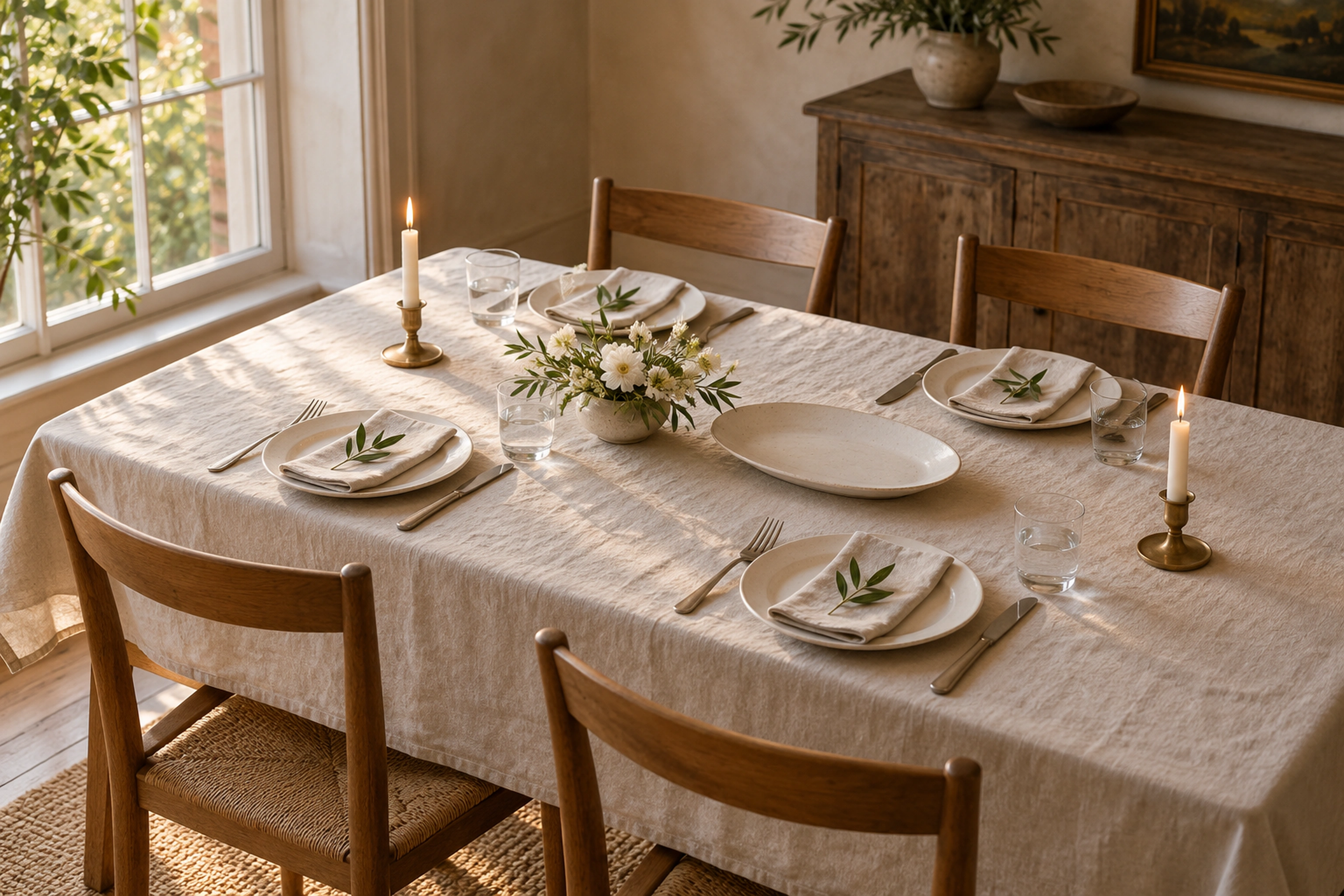
A calm, candlelit table with soft linen, olive branches, and warm brass. Every piece is simple to find and easy to reuse.
Food
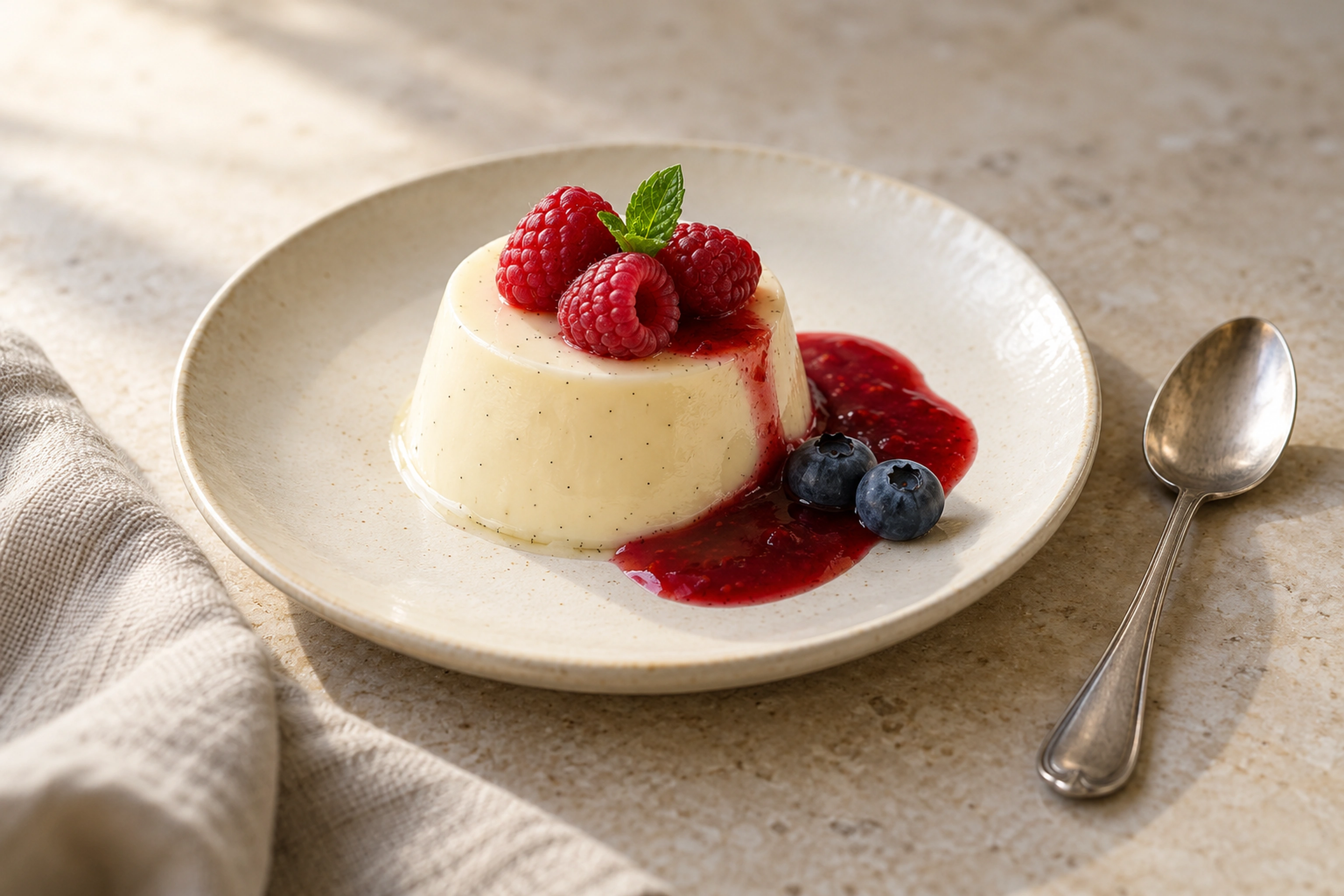
An individual vanilla panna cotta plating concept with berries, mint and red sauce.