Food
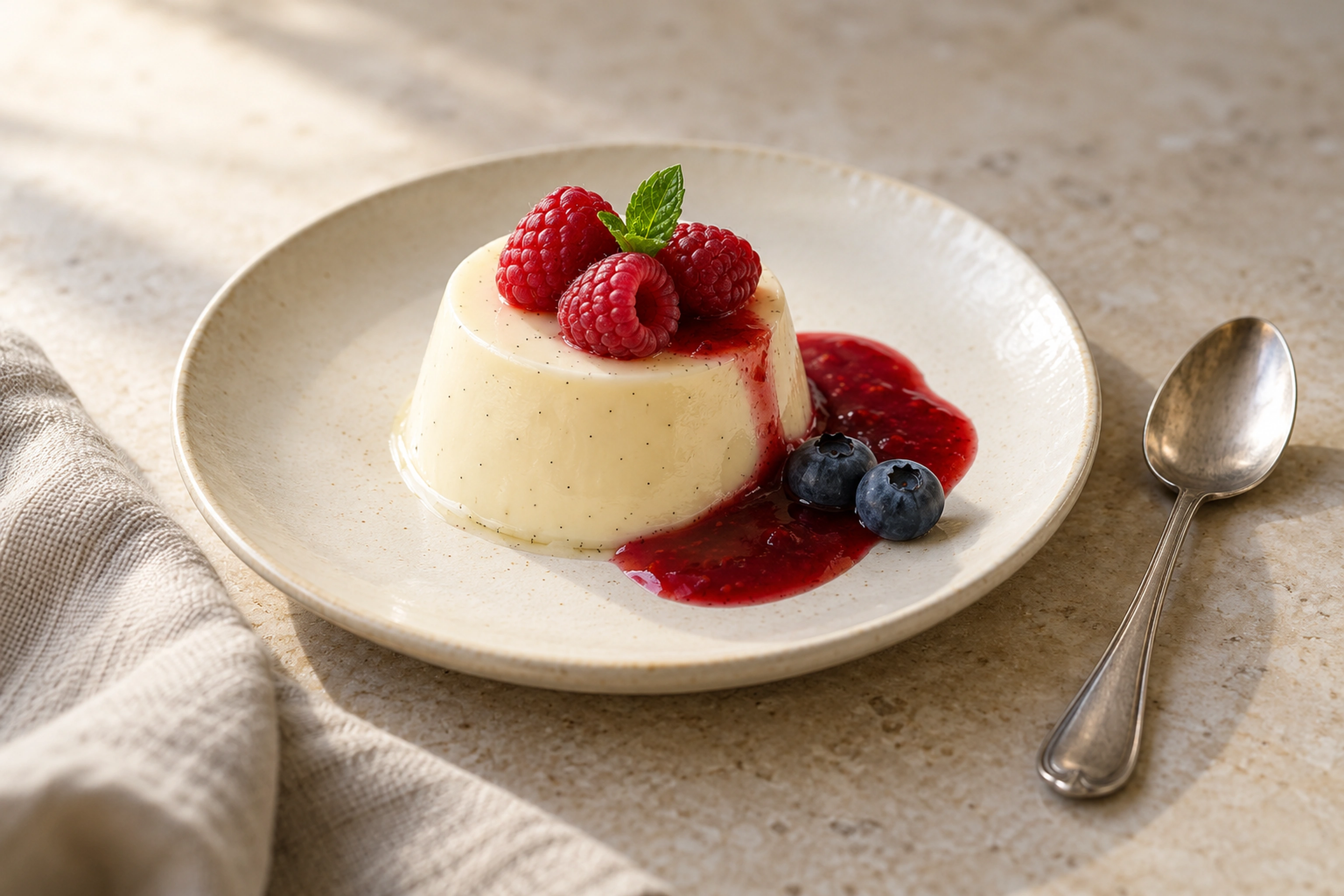
Vanilla Panna Cotta with Berry Garnish
An individual vanilla panna cotta plating concept with berries, mint and red sauce.

Food · Dessert Plating at Home
Start with a plate that leaves a little breathing room, place the dessert first, then add a small amount of sauce and one edible garnish. A spoon, a vegetable peeler and a clean cloth are enough for a thoughtful finish.
Favorites are saved on this browser. Sign in to keep them across devices.
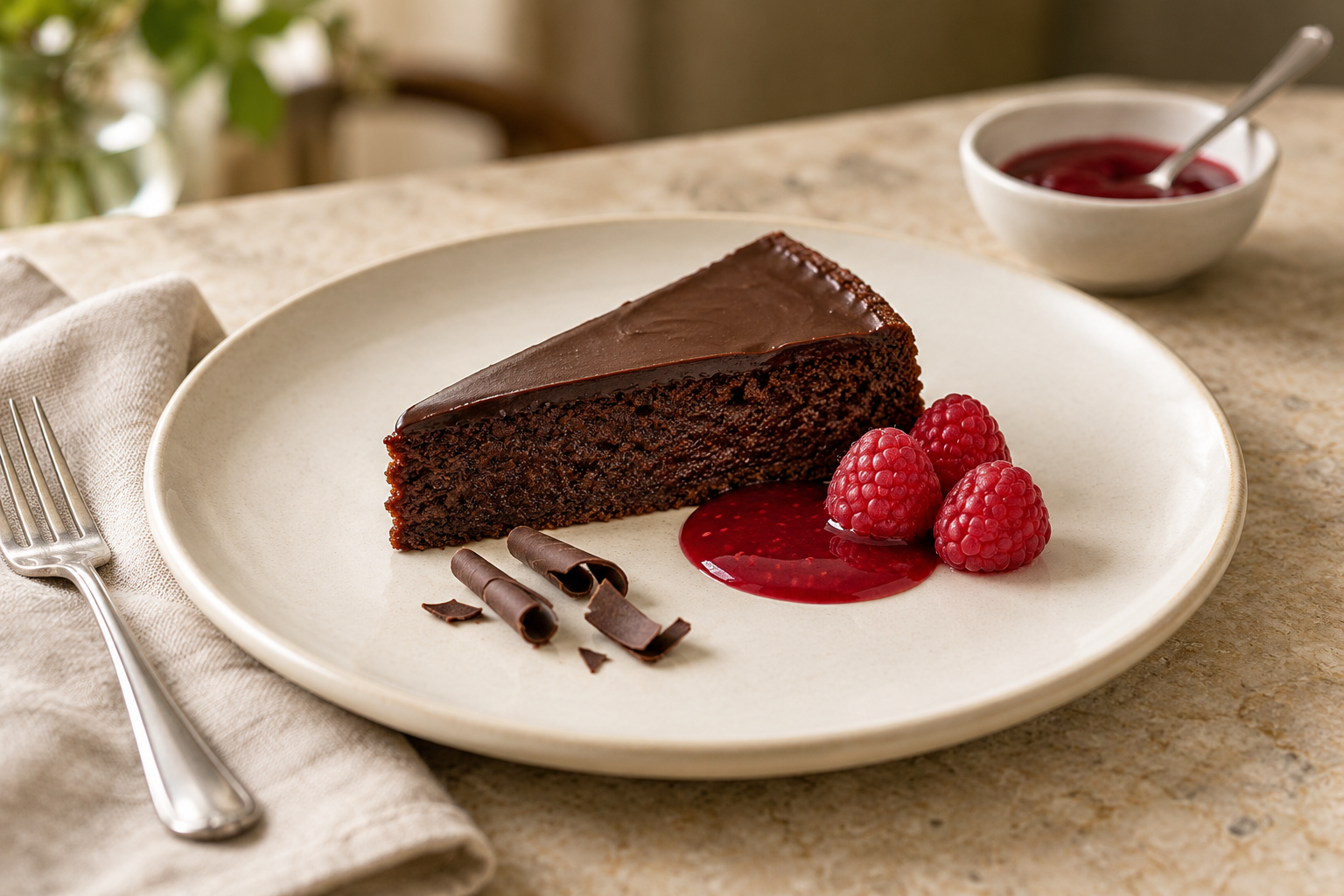
The most effective dessert plating ideas begin with the dessert itself: its flavour, texture, portion size and serving temperature. Choose a garnish that improves the eating experience rather than simply filling space. Tart berries can balance a rich, creamy dessert; a few chocolate shavings add a delicate finish; biscuit crumbs introduce crunch. Repeat an ingredient already in the dessert when you want a cohesive result without adding another flavour.
Choose one focal point and keep supporting elements smaller. A cake slice already provides height and structure, while a panna cotta benefits from a clear outline and space around its curved shape. Group the garnish near the dessert so guests can combine the elements in one spoonful rather than chasing individual decorations around the plate.
Start with an ordinary plate that comfortably holds the portion, sauce and garnish without crowding the rim. White or softly coloured plates make most desserts easy to see; heavily patterned plates can compete with delicate details. For simple plating ideas at home, a familiar plate and a restrained arrangement usually work better than oversized crockery and elaborate decoration.
Consider temperature before styling. Do not place ice cream on a warm plate, and keep chilled desserts refrigerated until it is time to finish and serve them. Save delicate chocolate decorations for a cool surface. A beautiful arrangement is only successful if the dessert reaches the guest in good condition.
For a simple sauce finish, place a small spoonful on a clean plate and draw the back of the spoon through it once. A thicker sauce holds a defined shape; a thinner sauce is better presented as a small pool. Test the consistency on a spare plate before arranging the dessert, and avoid repeated strokes that turn a clean mark into a smear.
For a dinner party, finish one sample plate before assembling the others. Check that the portion looks generous enough, the garnish stays in place and the arrangement can be repeated without slowing service. Set out plates and tools first, then work in a consistent order: sauce, dessert, stable garnish and delicate finishing touches. Adjust that order when a dessert needs to be unmoulded directly onto its plate.
For a specific creamy-dessert example, see vanilla panna cotta with berry garnish. Its photograph is an AI-generated illustrative concept, not evidence of a tested recipe result.
Check every component, including bought sauces, chocolate, biscuit crumbs and decorative toppings. Milk, eggs, wheat, soy, peanuts, tree nuts and sesame can appear in dessert ingredients. Read the full ingredient list each time rather than relying on a product’s appearance or a previous purchase.
Ask guests about dietary requirements before planning the garnish. Removing a nut topping does not make a dessert suitable for someone with a nut allergy if nuts are already in the recipe or cross-contact has occurred. Use clean equipment and separate ingredients as needed, and be clear about anything you cannot verify.
Dietary preferences require separate checks. Gelatin in some panna cotta recipes is animal-derived, so confirm the recipe before describing the dessert as vegetarian. Vegan, dairy-free and gluten-free are different requirements; changing one garnish does not necessarily make the complete dessert suitable. Keep packaging or ingredient details available when serving guests.
No. An ordinary dessert plate is often more practical for a home dinner party. Choose one that leaves a little space around the portion without making it look lost. Check the usable centre of the plate, since a wide decorative rim does not provide extra room for food.
Yes. A dessert with its own cream, filling, glaze or juicy fruit may already have enough moisture. A clean slice with a small complementary garnish can look complete. Good plate decorating ideas for desserts should respond to what the dessert needs, rather than adding sauce by default.
A consistent portion size and general arrangement matter more than matching every berry or shaving. Use the same serving spoon for sauce and repeat the position of the main dessert. Allow natural variation in handmade garnishes while making sure each guest receives a comparable serving.
Prepare suitable components separately, following their recipe and storage directions. Wash and dry fruit, portion sauces, organise tools and choose plates before guests arrive. Keep chilled components refrigerated, and add delicate decorations, melting elements and crisp toppings close to serving. Test an assembled sample if you need the presentation to hold, rather than assuming every component will remain unchanged.
Give it a clean presentation and one thoughtful accompaniment. Place a neat slice or individual portion on a suitable plate, add a small amount of compatible sauce if needed, and finish with a few berries or chocolate shavings. Keep the original ingredient information so you can answer guests’ questions accurately.
Start with the natural colours of the ingredients. A pale dessert may benefit from a small cluster of red berries, while a dark chocolate dessert can stand out against a light plate. You do not need several contrasting colours: a restrained palette often feels more elegant and keeps attention on the dessert.
Choose a clean plate with space around the dessert, but not so much that the portion looks lost. A plain pale plate makes dark cake or berry sauce easy to see; use a contrasting plate for a pale dessert if that suits your table.
Decide where the dessert will sit before adding anything else. Transfer it with a cake slice or spatula. Keep a fragile or moulded dessert supported, following its own recipe for handling.
Spoon a small pool of sauce beside the dessert. For a firmer cake, a short spoon-drawn streak can work; for a delicate panna cotta, keep the sauce placement gentle. Do not flood the plate or hide the dessert.
Choose one main edible finish: a few berries, a small mint garnish or chocolate shavings. Place it beside or on the dessert where it complements the flavour. Keep crisp decorations away from wet sauce until serving.
Look at the plate from the guest’s side. Remove anything unnecessary, wipe the rim, check the ingredients for dietary needs and serve according to the dessert’s own recipe.
Food
An individual vanilla panna cotta plating concept with berries, mint and red sauce.
Tables
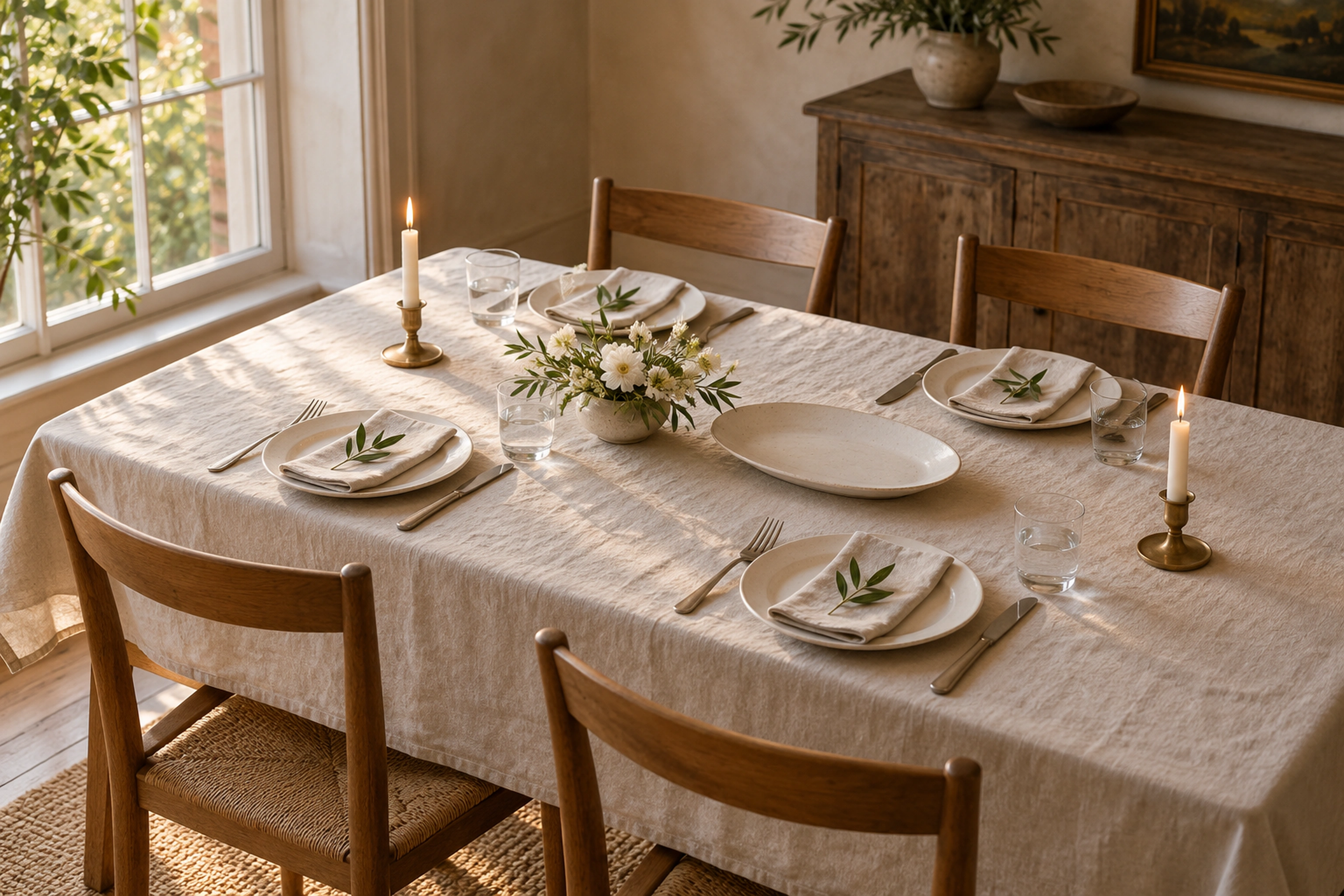
A calm, candlelit table with soft linen, olive branches, and warm brass. Every piece is simple to find and easy to reuse.
Drinks
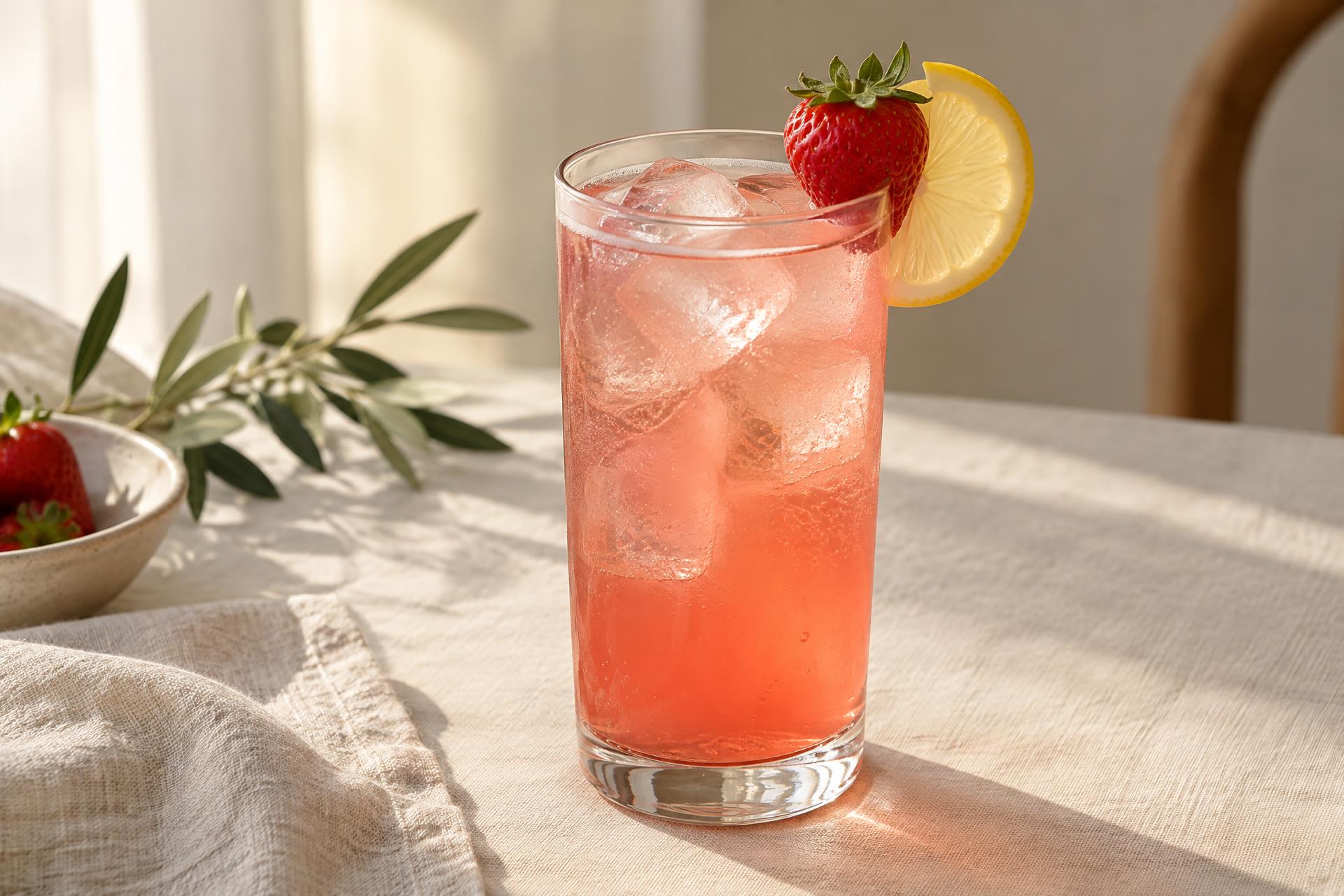
Recreate the strawberry and lemon garnish on an iced pink drink in a clear highball glass.